This guide provides a comprehensive overview of traffic control costs in Toronto for 2026, emphasizing that it is a customized service influenced by numerous variables rather than a one-size-fits-all expense. Understanding these factors is crucial for project managers, contractors, and event organizers to make informed budgeting and strategic planning decisions. National Traffic Safety Management (NTSM) is an experienced authority in the Toronto market, specializing in services like crash truck deployment and flagging operations.
Why Traffic Control is Not a “One-Size-Fits-All” Expense in Toronto
Traffic control in Toronto is a highly customized service tailored to the unique DNA of each project. It is not a commodity but a bespoke solution designed to fit specific needs, navigate complex regulatory landscapes, and mitigate inherent risks. Factors influencing this customization include:
- Specific Site Conditions: Ranging from wide-open suburban streets to cramped downtown arteries with limited space.
- Public Safety Requirements: Dictated by provincial and municipal standards.
- City Bylaws: Which can vary by neighborhood within Toronto.
Understanding that each traffic control requirement is unique is the first step toward smart budgeting, moving beyond simple hourly rates to embrace a dynamic, adaptable service.
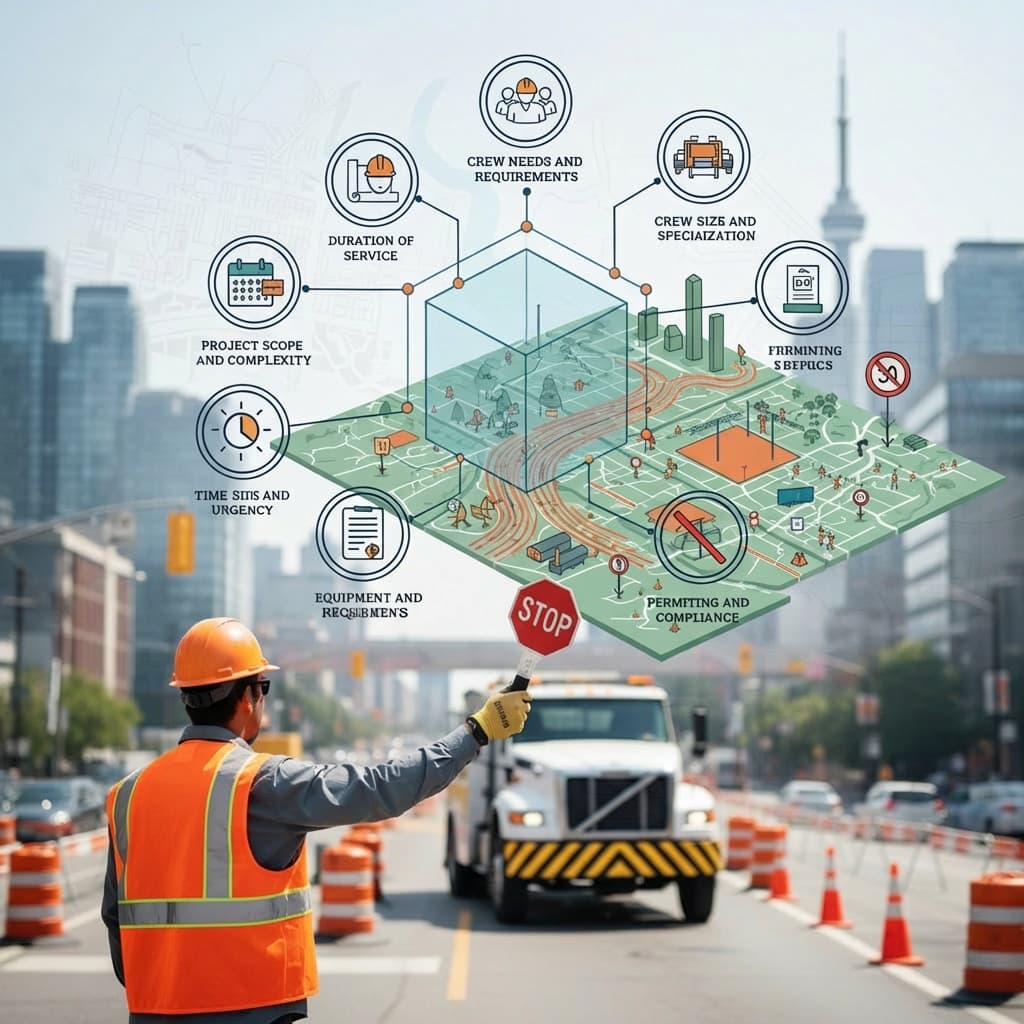
Decoding the Core Variables: What Drives Traffic Control Costs?
The cost of traffic control is determined by several key variables:
Project Scope and Complexity
- Impact: The most significant factor. A simple, short-term lane closure on a quiet street costs far less than a multi-phase, months-long infrastructure project through a major downtown arterial.
- Requirements: Larger, complex projects demand intricate planning, approval from multiple municipal departments (City of Toronto, MTO), elaborate detour routes, and sophisticated public communication strategies.
- Factors: Pedestrian management in high-foot-traffic areas, complexity of vehicle rerouting (especially for commercial trucks or emergency services), and potential disruption to public transit all escalate planning, personnel, and equipment needs.
Duration of Service
- Short-Term Engagements: Often measured in hours or daily rates, these typically have a higher per-unit cost due to mobilization, demobilization, and inherent inefficiencies. A minimum charge (e.g., 3-4 hours) is common.
- Longer-Term Engagements: Weekly, monthly, or multi-year contracts can offer economies of scale by amortizing equipment costs, optimizing staffing, and establishing efficient workflows. The average daily or hourly rate may be more competitive.
- Contingency: Longer projects are susceptible to delays from weather, site conditions, or logistics, necessitating contingency planning in the budget.
Crew Size and Specialization
- Cost Driver: The size and specialization of the crew directly correlate with payroll costs.
- Certification and Experience: Toronto’s rigorous safety standards emphasize certified, experienced professionals. This includes MTO Book 7 certification for Temporary Conditions.
- Specialized Personnel: Teams may require experienced flaggers, dedicated supervisors, and specialized operators for advanced equipment like crash trucks.
- Projected 2026 Union Rates (Toronto): Traffic Control Technician (base wage): Approximately $26.42 – $28.42 per hour. Total compensation (including benefits/pension): Often exceeds $35.00 – $40.00 per hour.
Equipment Requirements
- Basic Items: Traffic cones, regulatory and warning signs, barricades.
- Specialized Assets: Crash Trucks (Truck Mounted Attenuators – TMAs) are vital for protecting workers in high-speed traffic, costing $70 – $120 per hour with an operator. Other assets include Portable Light Towers, Temporary Traffic Signals, Changeable Message Signs ($150 – $250 per day), and Two-Way Communication Devices.
- Associated Costs: Maintenance, certifications, transportation, and skilled operators.
Understanding Toronto’s Unique Traffic Control Landscape and Regulations
Operating traffic control in Toronto involves specific challenges:
- Density: As Canada’s largest city, Toronto has high volumes of vehicular, pedestrian, and cyclist traffic, requiring more personnel and strategic planning.
- Stringent Standards: Governed by the Toronto Municipal Code, the Highway Traffic Act (HTA), the Vision Zero Plan, and the Ontario Traffic Manual (OTM) Book 7.
- Continuous Development: Ongoing construction stresses traffic arteries, necessitating advanced traffic management.
- Vulnerable Road Users: Plans must prioritize pedestrians and cyclists.
The True Value of Professional Traffic Control
Comparing traffic control prices on cost alone is perilous. The true value lies in enhanced public safety, legal compliance (avoiding hefty fines and stop-work orders), improved project efficiency, and protection of your company’s reputation and liability. Professional traffic control is an investment in safety, legal protection, and efficiency—not just an expense.
NTSM’s Approach to Cost-Effective Traffic Control in Toronto
NTSM focuses on delivering maximum value through safety, compliance, and efficiency. Our approach includes deep local expertise, efficient resource management, specialized services like expert crash truck deployment, proactive planning, transparent pricing, and tailored solutions. We emphasize smart, strategic safety management to provide reliable and cost-effective outcomes.